The Unglamorous Week: Legal Pages, a Payment Swap, and an SEO Push
No new features shipped this week across three live products — just the compliance, checkout and findability work that turns a demo into a real business.
Three of the live products in the portfolio moved this week, and not one of the changes is the kind of thing you'd put in a highlight reel. No new feature launched. What shipped was the unglamorous layer underneath — the part that decides whether a product is actually a business or just a demo that happens to be live.
FieldForce SA got a launch-readiness pass: Terms and Privacy pages, a required POPIA consent checkbox on signup that gates both the email and the Google sign-up path, and the company's real registration details in the footer instead of placeholders. Buried in the same batch was a proxy bug that had been quietly wrong since the Paystack integration went in — the app's /api/* auth gate was 401ing incoming Paystack webhooks before the webhook's own signature check ever got a chance to run. The route was already verifying the HMAC itself, so the session gate in front of it was pure risk with no upside. Subscription renewals and invoice-paid events would never have processed. Nobody in the loop, no error visible on a dashboard — it would have just silently not worked the first time it mattered.
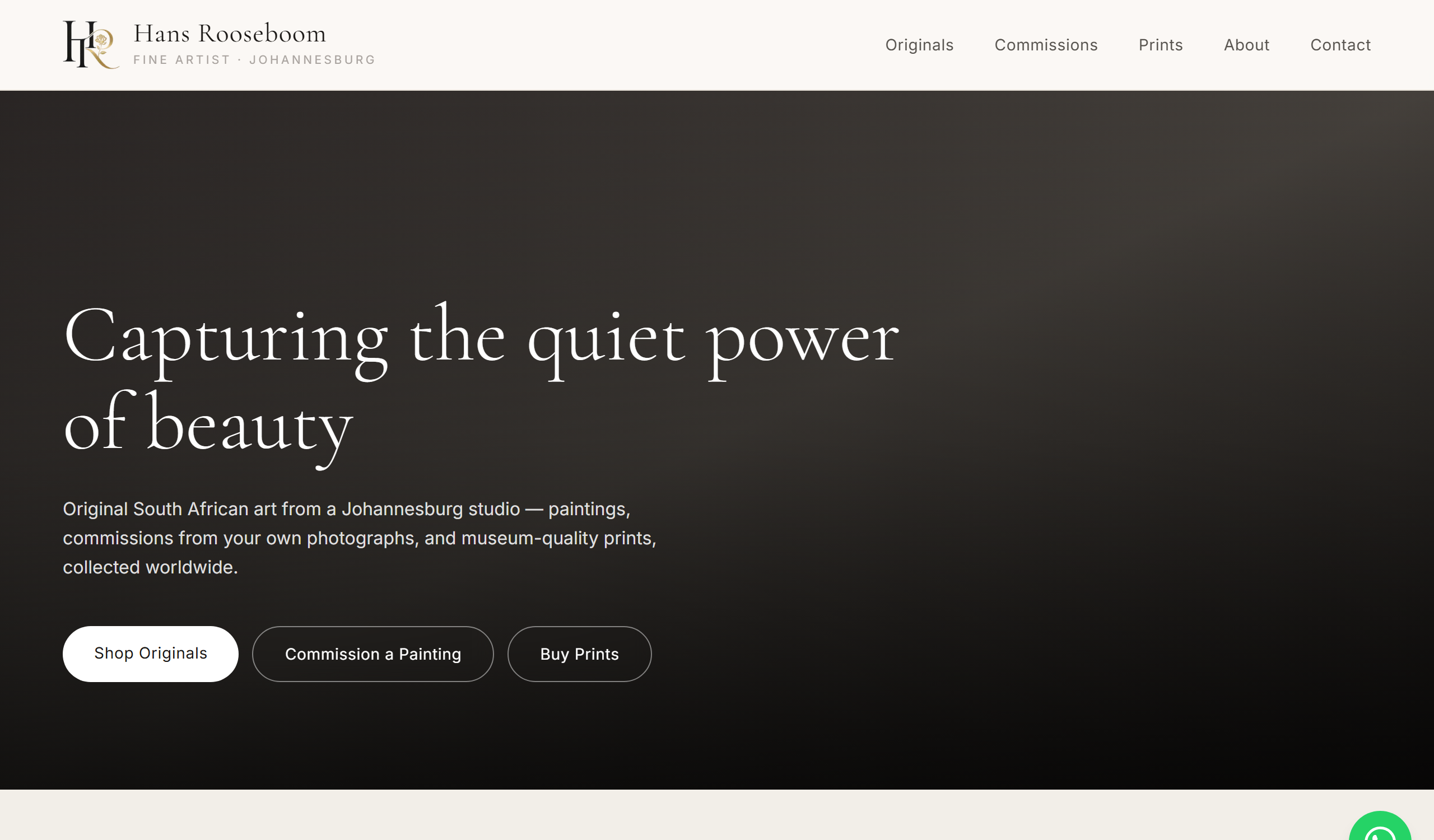
Hans Rooseboom Art swapped its South African checkout leg from Payfast to Paystack — same HMAC-signature verification discipline, same amount re-check against the order total, just a different provider. The international Stripe leg didn't move. Alongside that: a thematic collections feature so the gallery can be browsed by theme, a Price-on-Application tier for the premium originals, and — the part that actually matters most for a portfolio site — real first-person copy. An artist statement, a biography, a philosophy page, all built from Hans's own notes rather than placeholder text. A store with the right payment provider and no real voice behind it is still just a form.
FundReady SA spent the week on being findable. The homepage got rewritten for conversion — dual CTAs, schema markup, trust signals, a sticky mobile buy bar — and two new guides went up (NYDA funding, SEFA business plans) aimed at organic search rather than paid traffic. Underneath that: robots.txt, a sitemap, clean URLs, and verification in Google Search Console. None of it is visible to a visitor. All of it decides whether a visitor ever arrives.
The thread across all three: legal pages, a correctly-wired webhook, a payment provider that actually matches the copy describing it, a sitemap Google can read. None of this compounds into a demo you'd show off. It compounds into a product that doesn't quietly fail the first time someone tries to pay, sign up, or search for it.
Want one of these built for your business?
I build custom AI platforms and go-to-market engines end-to-end. Book a session and let's map it out.
Book a session